"The Centre is intended to supplement the present departments or their courses of instruction leading to degrees. It will foster a dialogue between the departments, the faculties, the Library and the Administration, in matters relating to cultural change resulting from technological innovation."
Marshall McLuhan (Draft Constitution, 1965)
“We become what we behold.” — Marshall McLuhan, Understanding Media: The Extensions of Man (Cambridge, MA: The MIT Press, 1994), 19
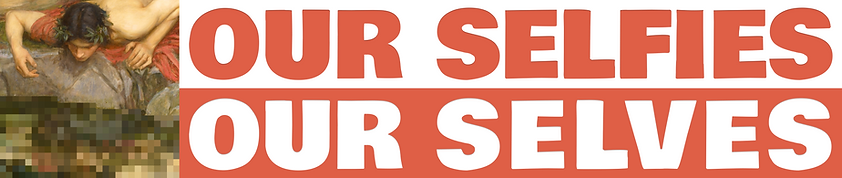
In Understanding Media, McLuhan diagnosed what he called the “Narcissus narcosis.” Narcissus’s name, he writes, “is from the Greek word narcosis, or numbness. The youth Narcissus mistook his own reflection in the water for another person. This extension of himself by mirror numbed his perceptions until he became the servomechanism of his own repeated image. The nymph Echo tried to win his love with fragments of his own speech, but in vain. He was numb. He had adapted to his extension of himself and had become a closed system.” As Narcissus misrecognized his own reflection as another, we misrecognize our extensions—our media, our technologies, our arts—as something other than ourselves, and thereby are numbed by them. For McLuhan, our technologies are indeed extensions of our selves. But this is a recursive relationship: “we become what we behold.” Our technologies are extensions of our selves; our selves are remade in the image of the technologies we use. In McLuhan’s scheme, every technology is a technology of the self.
The McLuhan Centre for Culture and Technology will dedicate its programming in the 2022–23 academic year to investigating contemporary technologies of the self. A number of such technologies have seemed salient in recent years: the selfie and its revolutions in our practices of imaging and self-imaging; our constant presentations of self in everyday life online; the endless online avatars we create, from dating profiles to VR avatars to the advertising profiles platforms collect; the intimate biometric technologies of the “quantified self”; or, simply, the endlessly irritating rectangle in the Brady Bunch grid of a video call that shows us back to ourselves—that we hopefully have now mostly grown numb over the last two pandemic years.
Contemporary media technologies—especially but not only social media—do not cease to work on the self, making it sharable, marketable, valuable. Billions upon billions of dollars have been spent on making such online selves seem desirable, salutary, even necessary. But, as Jia Tolentino has written, “selfhood buckles under the weight of this commercial importance.” Something as small and tender as a self may not hold up to such pressure. Social media may be a paradigmatic technology of the self, but it may also be a technology that obliterates the self.
The programming for next year does not presume that McLuhan’s way of entering into these problems is still especially salient, nor even that it was particularly apt in its time. We welcome a very broad array of approaches, including those critical of or oppositional to McLuhan’s thought. That said, we do embrace the generality of the problem of technologies of the self, across many unanticipated or surprising domains.
Meanwhile, the generality of the problem of the contemporary technologized self does not mean that all selves are technologized in the same way, with the same technologies, to the same degree, with the same value, or by the same procedures. “Our Selfies, Our Selves” intimates that the crux of contemporary selfhood may lie in the familiar imaging genre of social media, but it does not stop there. More than anything else, this theme is dedicated to critical inquiry into the ways different selves and different kinds of selves are gathered together, dissipated, forced into being, shattered, unraveled, stabilized, valourized and monetized, lived through—in an age of an unprecedented technical and mediatic investment of the self.
Finally, we mean the playful reference to the classic feminist text, Our Bodies, Our Selves, as more than a mere reference. We take the problem of the self to be worked out most explicitly in theories, arts, and activism from those who are marginalized—women; queers; those who are trans, nonbinary, and/or gender-nonconforming; the disabled; migrants; people of colour; Black people; Indigenous people. For it is frequently those who are marginalized who must live with a self that structures of extraction and domination have made a problem.
The McLuhan Centre will host a number of programs dedicated to exploring this theme. We plan to host:
-
an Artist-in-Residence, whose work substantially engages the question of the technologized self;
-
three Faculty Fellows, who will give public lectures offering critical accounts of technologies of the self;
-
three Graduate Fellows whose scholarly work engages in these questions;
-
six working groups with projects that touch on these questions;
-
and regular programming of Monday Night Seminars.
We will be announcing details of these programs, and others, in the coming days and weeks. Stay tuned. All programming and calls for applications will be announced in our newsletter and on our website.
Call for Applications – Artist in Residence 2022-23
The McLuhan Centre for Culture and Technology at the University of Toronto seeks applications for an inaugural Artist in Residence. The theme for our programming in the 2022–23 academic year is “Our Selfies, Our Selves.” The Artist in Residence will engage questions of the “technologized self” or “technologies of the self” in an exhibition of their work at the McLuhan Centre Coach House and will participate in McLuhan Centre programming as detailed below.
A number of such “technologies of the self” have seemed salient in recent years: the selfie and its revolutions in our practices of imaging and self-imaging; our constant presentations of self in everyday life online; the endless online avatars we create, from dating profiles to VR avatars to the advertising profiles platforms collect; the intimate biometric technologies of the “quantified self”; or, simply, the endlessly irritating rectangle in the Brady Bunch grid of a video call that shows us back to ourselves. This year’s theme is dedicated to aesthetic and critical inquiry into the ways different selves and different kinds of selves are gathered together, dissipated, forced into being, shattered, unraveled, stabilized, valorized and monetized, lived through—in an age of an unprecedented technical and mediatic investment of the self. A full statement of the theme is described above.
We seek the perspectives of those for whom structures of extraction and domination have rendered selfhood a problem. As a matter of principle, but also in regards to this year’s theme, we are especially eager to receive proposals from queer, trans, nonbinary, femme, racialized, disabled, or otherwise marginalized artists.
We seek artists working in “media art,” very broadly understood. This might be work that uses digital technologies and electronics as its artistic medium. Or, it may use any means or media to pose questions or draw insights about contemporary technologies. Or, it may be some conjunction of art, technology, and concept that we have not yet imagined.
We welcome projects in progress as well as proposals for new projects. We are happy to host artists working in pairs or teams.
The studio and exhibition space will be the Coach House, a multi-use heritage building that was once McLuhan’s salon on campus. Successful projects will activate the space while respecting the limitations of that space. The exhibition space measures approximately 6.643 x 6.014 meters. Photos of the space are available upon request.
Artist Support
The Artist in Residence will have studio, work, and exhibition space at the Coach House, on campus at the University of Toronto, from July 15 through October 15, 2022 (start date flexible), with the expectation that an exhibition will run from September 12 through October 15.
The Residency comes with a stipend of $10,000; a materials budget of $5,000 (CAD); photo and/or video documentation of the exhibition; access to the University of Toronto libraries; research assistance and logistical support; and a vibrant intellectual community dedicated to critical inquiry into media.
In addition to hosting an exhibition, the Centre will also invite three Faculty Fellows (one from the University of Toronto; two from other institutions) to view and engage with the Artist’s work. The Fellows will visit the exhibition while it is mounted, and will return to campus in the Winter Term to deliver public lectures that will be, in part, in conversation with the Artist’s work. We anticipate that Artist’s and Fellows’ lectures will be published, alongside documentation of the exhibition.
The Centre will be happy to help coordinate studio visits with University of Toronto faculty during the residency.
Living and/or moving expenses will not be covered.
Artist Responsibilities
Beyond the mounting the exhibition, the Artist in Residence will be expected to make themselves available to host class visits to the exhibition. They will also host the first session of the Centre’s artist-run “Playtime” series (in early October), running a single 3-hour workshop on a topic of their choosing for students and faculty. As well, the Artist will deliver a public artist’s talk or lecture related to the work in January of 2023, and to work with the Director of the Centre to prepare this talk for publication.
Eligibility
The Artist must be eligible to work in Canada (e.g., Citizen or Permanent Resident; holders of restricted Work Permits are not eligible). The Artist must not be a current student at the University of Toronto, nor may they hold a full-time staff or academic position at the University (but sessional instructors may apply).
To Apply
All inquiries about the program may be sent to [email protected].
To be considered for the residency, please submit the following by email to [email protected] not later than May 20, 2022:
-
Cover letter
-
CV
-
Project proposal of approximately 500 words (and not more than 750)
-
Representative portfolio